


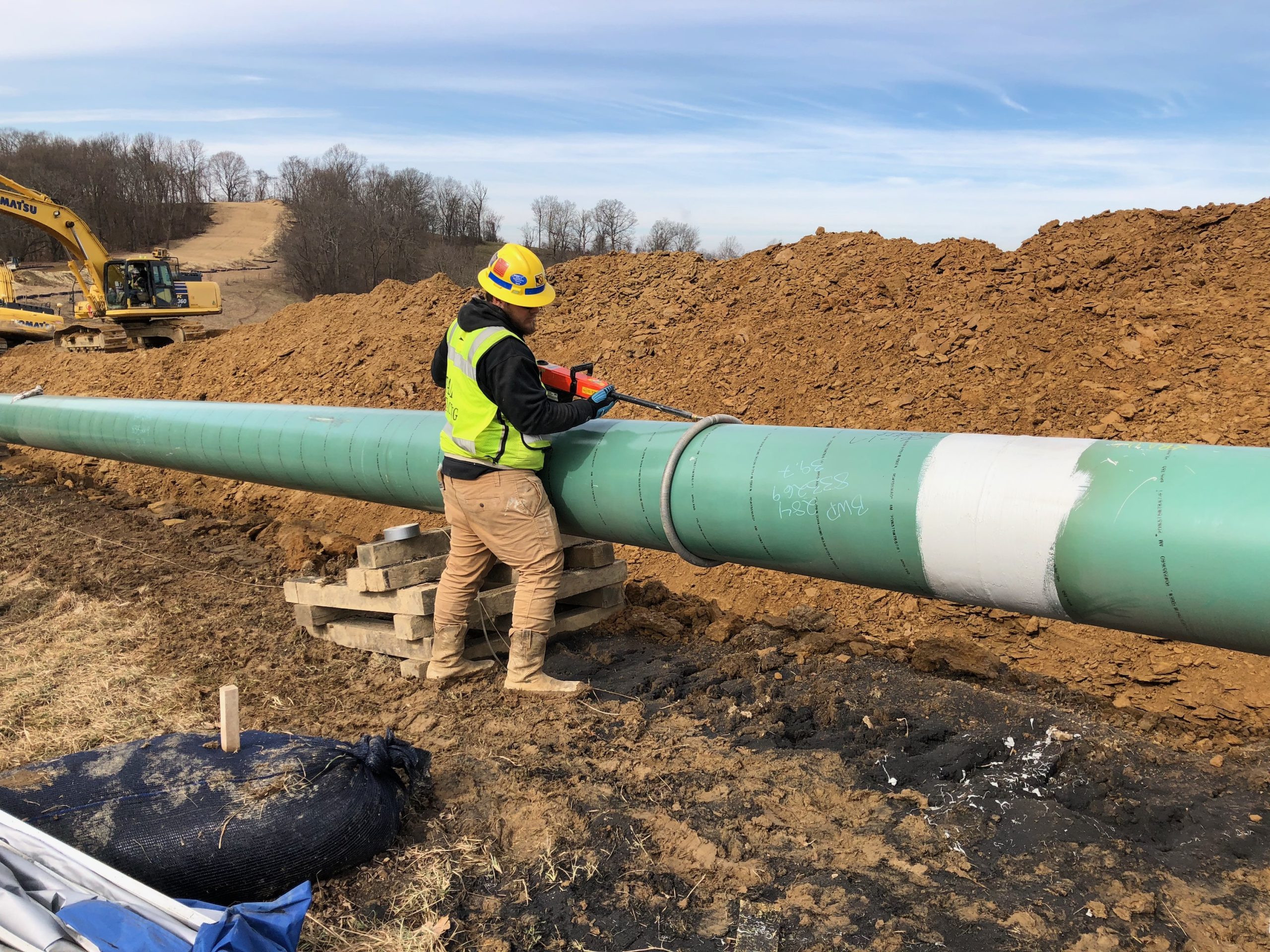
America has the natural gas resources to meet rising electricity demand, help mitigate consumer costs, support domestic manufacturing, and strengthen its position in global energy markets. The challenge? Building the infrastructure to deliver that energy where it is needed most.
For Pennsylvania, Ohio, and West Virginia, the consequences are particularly significant. Despite being among the world’s most productive natural gas regions, the Appalachian basin is restricted by red tape – federal permitting delays and years of litigation have stalled the projects critical to moving low-cost energy to homes, businesses, manufacturers, and power generators.
As Congress considers the bipartisan American Affordability and Jobs Act (BAAJA) to address these barriers, the MSC has joined partners from across the region in advocating for common-sense permitting reform.
Here’s what leaders around the nation are saying about this critical moment:
Moving Beyond Delays to Deliver Results
“American natural gas is essential to our nation’s energy security, economic growth, and ability to meet rising demand,” Marcellus Shale Coalition president Jim Welty emphasized.
“Yet outdated, overlapping federal permitting requirements continue to delay critical infrastructure projects without providing commensurate environmental benefits, constraining our ability to safely deliver abundant, affordable, and reliable American energy to consumers.”
Business leaders from across the country, including the PA Chamber of Business and Industry, echoed those concerns:
“Today, it takes an average of four to seven years just to clear the federal environmental review process for major infrastructure projects. Frivolous litigation and overlapping agency jurisdictions stall projects for years after they should have been breaking ground, deterring investment and obstructing opportunity,” the business leaders wrote in an open op-ed to Members of Congress.
“At a time when electricity demand is increasing, manufacturers are looking to invest and grow, and our allies are seeking secure sources of energy, we cannot afford to have of our nation’s greatest energy advantages stranded in permitting purgatory,” MSC warned alongside the Ohio Oil & Gas Association and Gas and Oil Association of West Virginia.
Welty has also called for targeted federal permitting reforms, arguing that modernizing key environmental laws could help unlock critical energy infrastructure projects stalled by unnecessary delays.
“Modernizing the Clean Water Act, particularly Section 410, and the National Environmental Policy Act, while establishing reasonable guardrails for judicial review, would reduce unnecessary delays and duplicative reviews and provide greater certainty for the development of critical energy infrastructure,” Welty stated.
New England has spent years restricting access to the very energy resources that could help address its affordability and reliability challenges. MSC seized on Massachusetts Gov. Maura Healey’s call to expedite pipeline reviews, highlighting the consequences of policies that have stymied critical infrastructure needed to bring Pennsylvania natural gas to the region.
“The energy affordability and reliability challenges facing New England today didn’t emerge overnight. They are a direct result of politically motivated decisions to deny consumers in the region from accessing abundant and clean Pennsylvania natural gas. Years of misguided policy decisions prevented the development of the critical energy infrastructure needed to safely deliver that resource to consumers,” the MSC wrote.
BAAJA could reduce natural gas costs in regions where pipeline constraints prevent relatively inexpensive domestic supplies from reaching consumers. This is particularly relevant in the Northeast, where limited pipeline capacity can drive sharp winter price spikes and increase reliance on imported LNG and fuel oil to meet regional gas and electricity demand. In January 2025, for example, natural gas at the Algonquin Citygate in New England averaged $16.37 per million British thermal units (MMBtu), compared with $4.13/MMBtu at Henry Hub. Stranded gas in the Marcellus, currently trading at ~$1/MMBtu at Eastern Gas South Hub, would be the most likely resource tapped for Northeast gas expansion.
Permitting reform is also a matter of economic and national security. Former White House officials – spanning Clinton, Bush, Obama, Biden, and Trump administrations – also urged Congress to move this legislation forward, citing the stakes for U.S. economic competitiveness and national security:
“While the United States retains enormous advantages in technology, capital markets, attracting the world’s talent, entrepreneurship, and natural resources, those advantages matter less if a company cannot build a factory quickly enough to reach market or if the infrastructure required to power it takes five, ten, or fifteen years to plan and complete,” the former White House officials wrote.
For a country with abundant natural gas resources, the inability to build the infrastructure needed to deliver these resources to American consumers and other critical end users is a liability we can’t afford. The time to act is now.
