


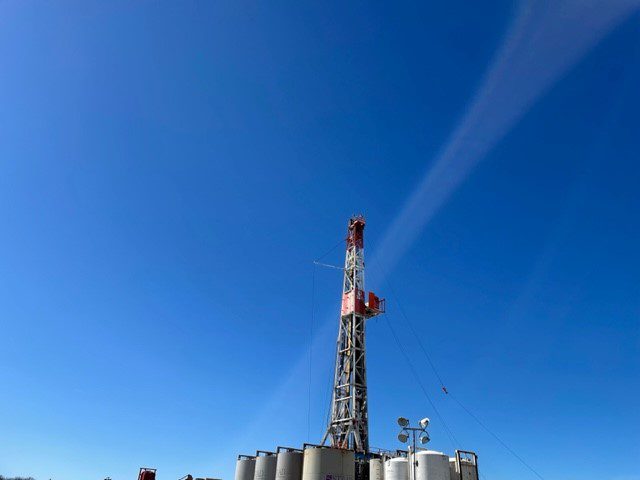
PHOTO: A natural gas drilling rig rises in Lewis Township, Lycoming County
The Marcellus Shale Coalition had a busy week in Williamsport, bringing together members, community leaders, and media to highlight the natural gas industry’s continued impact across northcentral and northeastern Pennsylvania.
During a member networking reception hosted in partnership with the Williamsport/Lycoming Chamber of Commerce and the Women’s Energy Network (WEN) Susquehanna Valley Chapter, MSC convened industry members, business leaders and elected officials to discuss the opportunities and challenges facing Pennsylvania’s natural gas industry. The gathering underscored the importance of building relationships in the communities where our members live and work.
That local connection also came through in a series of stories published by the Williamsport Sun-Gazette following a visit from MSC President Jim Welty.
“This is an important area for our industry and it’s important for the MSC representing them to make sure that connection with the community continues but also providing that opportunity for our members to get together,” Welty told the Sun-Gazette.
As Pennsylvania looks to meet growing energy demand, expanding infrastructure and creating a predictable regulatory environment will be critical to unlocking the full value of the Commonwealth’s natural gas resources. That’s why the MSC focuses on advancing four key priorities for the industry: operational certainty, infrastructure buildout, clean and efficient energy development, and capitalizing on downstream opportunities.
In many ways, northcentral and northeastern Pennsylvania is at the center of those priorities. With the region accounting for roughly 54% of Pennsylvania’s natural gas production, the industry supports jobs, generates tax and impact fee revenue, and contributes to local communities.
Since 2012, Pennsylvania communities have received more than $3.2 billion in impact fee revenue.
“From this fee have been improvements to bridges, creation of parks, recreational facilities for families and individuals to relax and play and watch nature, infrastructure that powers the cities, boroughs and townships and these are dollars that otherwise would bankrupt communities that are operating on tight general fund budgets,” Welty emphasized.
Perhaps most importantly, Welty highlighted an area that often gets lost in broader debates about energy: the workers in this industry are members of these communities, too. They coach Little League, shop at local businesses, volunteer and raise their families here. And they have every reason to ensure the work they do is safe, responsible and environmentally sound.
That commitment is reflected in the industry’s continued progress, including the Appalachian Basin’s nation-leading methane intensity performance, the sustainable reuse of roughly 93% of water used in operations, and advances in drilling technology that allow more production from smaller surface footprints.
From the conversations at our networking reception to the stories shared through local media, last week was a reminder that natural gas is not just produced in these communities, it empowers them.
Read the series from the Williamsport Sun-Gazette, and check out MSC’s recap reel.
