


Natural gas – it’s the very molecule our industry produces and transports, and it’s an essential building block to our everyday lives.
For us, keeping those molecules in the system so they reach their end user – whether it’s a home on these frigid days or a steel mill or hospital to keep the lights on – makes good business and smart environmental sense.
After all, it’s not good business to let your product escape into the atmosphere.
The good news is that MSC members continue to lead on ensuring every molecule reaches market. And the science backs it up. In fact, the Appalachian Basin continues to lead the nation in operational performance, delivering the lowest methane intensity of any major U.S. natural gas producing region, according to federal government and Clean Air Task Force data. That distinction reflects deliberate operational choices as methane – or natural gas – is the very product producers sell, and capturing it efficiently is central to how the industry operates to meet the needs of Pennsylvania consumers.
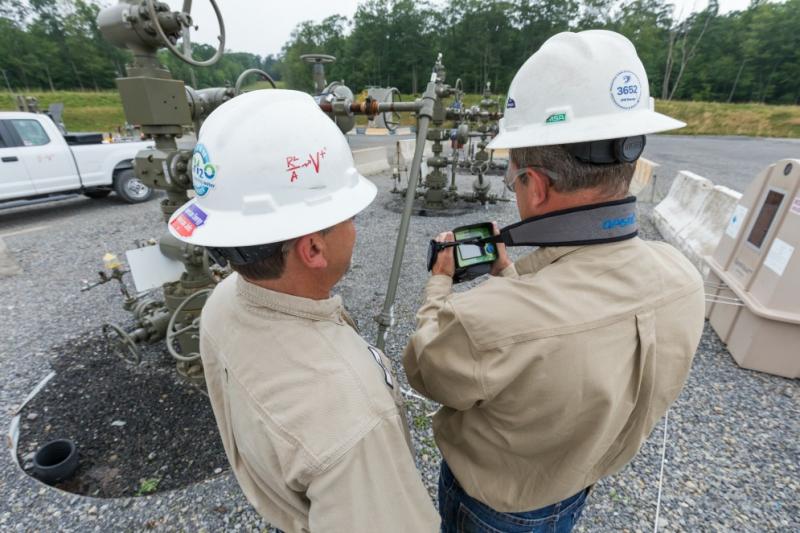
From the wellhead to burner tip, operators have taken action to keep the system “tight”: switching out pneumatic devices, deploying real-time stationary emissions monitors, conducting routine flyovers with methane-detection technology, and making operational changes to minimize methane vents and leaks.
It’s a climate and business winner.
“No one is sitting on their laurels saying we’ve reached sufficient methane intensity,” MSC’s Patrick Henderson recently told the Financial Times. “There will continue to be a focus on doing better next year than we did this year.”
Despite continued progress, some anti-American energy groups, like GasLeaks, continue to push flawed data and measurement approaches to paint a false narrative regarding the performance of Pennsylvania’s natural gas industry
Here’s four things to know:
-
Don’t Just Rely on Satellite Data
Methane detection from space is an advancing technology, but has its limitations, particularly in determining emission rates and associated volumes. These factors are largely dependent on technical considerations, as well as site-specific weather. Unfortunately, recent media highlighted satellite-detected methane releases failed to account for site-specific wind speed and other weather variables, making their volume estimates inaccurate.
These inaccuracies led to some observations being labeled as “super emitter” events. The term “super-emitter” has a specific regulatory meaning, but it is often applied too broadly. U.S. EPA guidance references these events as emitting 100 kilograms of methane per hour, a threshold that assumes sustained emissions over time, rather than a single snapshot.
Satellite systems seek to capture a snapshot in time. Too often these snapshots inaccurately estimate methane emission rates – or even the correct source of emissions. Short-duration releases occur for legitimate operational reasons, particularly during maintenance or repair activities when controlled venting is necessary to protect workers and equipment.
Treating episodic events without additional on-the-ground confirmation as evidence of ongoing emissions mischaracterizes both the data and the operations involved. And it ignores the reality that Pennsylvania has adopted tough regulatory standards that operators must meet, including vigorous permitting thresholds for well pads, compressor stations and processing facilities.
-
Distinguishing Coal Vents
With Appalachia’s history of coal mining activity, there’s been long-existing venting of methane from abandoned mines. In many parts of the state, unconventional natural gas development overlaps these areas, making it easy to tag detections to oil and gas equipment when the real culprit may be an abandoned mine vent.
Similar to weather data, various means of methane detection – including on-the-ground monitoring, flyovers, and well performance data – must be taken into consideration when measuring methane emissions performance.
-
Putting Methane in Perspective
Methane emissions should also be evaluated in the context of all sources, both human-induced and natural. Natural gas production and processing is not the dominant contributor to methane emissions in the United States.
Basic emissions data consistently shows that:
– Agriculture accounts for roughly 34% of human-induced methane emissions, about twice the contribution from natural gas production and processing
– Natural gas production and processing contributes less than 17% of human-induced methane emissions
– U.S. methane emissions from all human-induced sources are down 19% since 1990, despite an increase in natural gas production of over 104%
– Wetlands are the single largest source of total methane emissions in the United States, responsible for roughly 33% of all emissions
– When human-induced and natural sources are combined, natural gas production and processing represents roughly 9% of total methane emissions, while wetlands emit more than three times as muchThese facts do not minimize the importance of continued methane reduction; they provide necessary perspective.
-
Who’s Funding the “Research”?
Emissions data is useful when it’s presented accurately and in full context. Problems arise when limited observations are used to support sweeping conclusions that the data itself does not establish.
GasLeaks has repeatedly taken this approach, framing short-duration or isolated detections as evidence of systemic failure. The organization has received substantial funding from foundations with a long history of advocating for natural gas bans. This includes a $2.5 million grant from the Rockefeller Foundation, which has funded extensive anti-natural gas research and activism.
For policymakers, investors, and community stakeholders, understanding how methane data is collected, interpreted, and contextualized is essential to informed decision-making.
Pennsylvania’s natural gas industry is in the business of safely delivering life-sustaining energy to our homes, schools and other end users – not letting dollar bills aimlessly fly off into the atmosphere. And the industry does it better in Pennsylvania than anywhere else in the world.
