


America’s demand for reliable energy is growing, and Pennsylvania and the broader Appalachian Basin are well positioned to meet it. From new manufacturing and power generation to data centers and other energy-intensive industries, companies are investing close to where there’s access to clean, affordable, and reliable energy.
Appalachia has it. The challenge now is making sure that the infrastructure, policies and workforce are in place to put those resources to work.
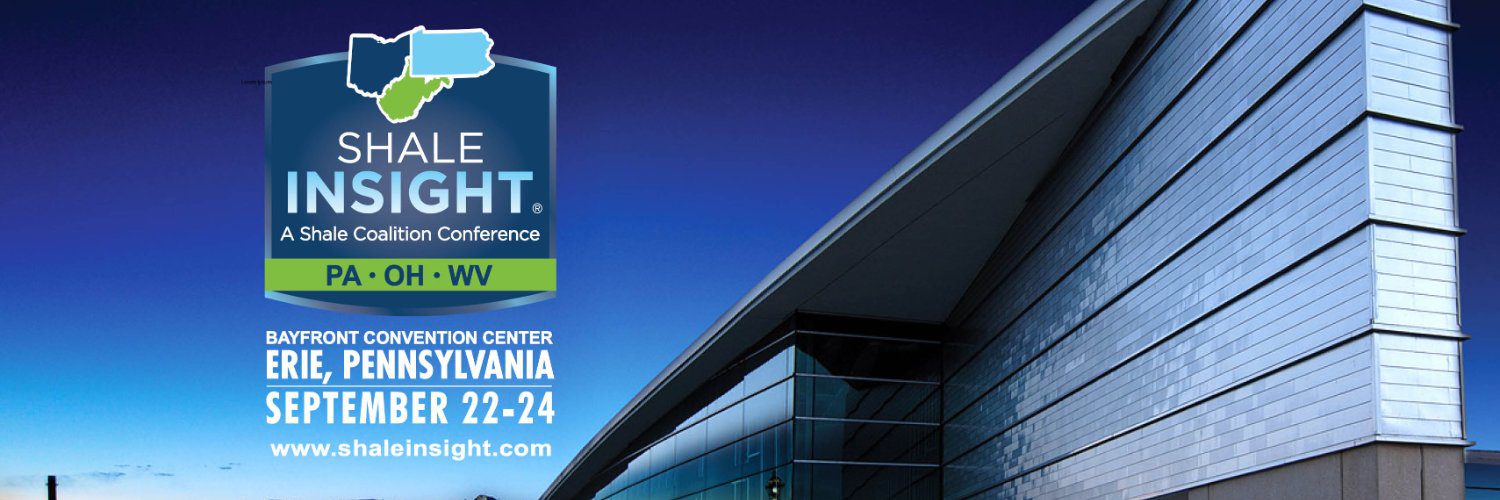
That will be a central focus of SHALE INSIGHT® 2026, taking place Sept. 22-24 at the Bayfront Convention Center in Erie, PA. The conference will bring together the nation’s energy leaders, policymakers, researchers, innovators, and workforce representatives for three days of discussion on the forces reshaping American energy — and what it will take for Appalachia to keep pace.
“The Appalachian Basin offers something that power producers, hyperscale developers and advanced manufacturers cannot find anywhere else: clean, affordable, and abundant energy resources built on proximity, reliability, and scale,” Marcellus Shale Coalition (MSC) president Jim Welty wrote in GOErie.com.
“For the companies building America’s digital and industrial future, affordable energy nearby is not a preference. It is a requirement.”
That demand is already reshaping the energy landscape. Electricity needs are rising alongside data center development, artificial intelligence, and the reshoring of U.S. manufacturing. At SHALE INSIGHT, longtime energy analyst Kevin Book will examine those trends and what they mean for American energy security and the future of domestic production. Meta’s Etta Lockey will address another piece of the equation: how data center developers, utilities and energy companies can work together to bring new infrastructure online while supporting the grid and surrounding communities.
But having the resource is only part of the equation.
As Welty has emphasized in recent media appearances, the region’s biggest challenge is whether we can build the infrastructure needed to put our abundant resources to work.
“Pipeline constraints in Appalachia are second to none. We have incredible production here — in Pennsylvania alone. We are sitting on this great resource but cannot get to it without the pipelines and infrastructure,” he said on Natural Gas Intelligence’s Hub & Flow Podcast.
That constraint has consequences beyond Pennsylvania.
“There is a reason New Englanders are paying up to 80% more for their energy — and it is because they do not have access to this Pennsylvania-produced clean, affordable, and reliable energy source that is just a couple hundred miles away from them, because of this blockade on the pipeline going through New York,” Welty said in an interview with the Williamsport Sun-Gazette.
These are the kinds of issues SHALE INSIGHT is designed to address.
Building the infrastructure America needs will require regulatory certainty and a permitting process capable of keeping pace with demand.
This year’s conference will examine the policy and regulatory issues shaping what can be built and how quickly — from permitting reform and federal energy policy to the legal and regulatory implications of the EPA’s 2026 rescission of the Endangerment Finding. Senior leaders from the Federal Energy Regulatory Commission (FERC) and U.S. Pipeline and Hazardous Materials Safety Administration (PHMSA) will also discuss the future of Appalachian natural gas and the upstream-to-midstream dynamics shaping America’s energy supply chain.
And the conversation extends beyond infrastructure. The people building and operating that infrastructure will be just as important to meeting rising demand.
“Somewhere in Appalachia today, a pipefitter went to a job site before dawn. A drilling engineer will review subsurface data. A researcher will test a new technology designed to make energy production more efficient. And a boilermaker will finish a shift that started the night before. These are the people who keep the lights on. And right now, the country needs them more than ever,” Welty wrote in GoErie.
SHALE INSIGHT will put that workforce front and center, with leaders from the International Brotherhood of Boilermakers addressing the partnership between the energy sector and the skilled trades. The conference will also explore new approaches to workforce development, including immersive technology and industry-education partnerships.
Innovation will be another major part of the conversation. The SHALE INSIGHT Technology Showcase will feature emerging technologies designed to improve natural gas production and services, while the University Research Showcase will give students and faculty an opportunity to present their work directly to industry leaders.
What comes next for Appalachia?
That is the question at the heart of this year’s conference. The agenda spans the energy system from the wellhead to the burner tip, bringing together leaders from across energy, power, manufacturing, technology, government, and the trades. Sen. Dave McCormick, U.S. Deputy Secretary of Energy James Danly, Meta’s Etta Lockey, and other national experts will examine the forces driving demand, the infrastructure and policy barriers that stand in the way, and the opportunities created by putting Appalachia’s resources to work.
“The leaders gathering here will determine what gets built next, what policies must change to make it possible, and how this region’s energy advantage creates lasting opportunity for the country and our allies around the world,” Welty stated.
Appalachia has the energy resources to power America’s digital and industrial future. The opportunity now is to build what is needed to deliver that energy — and to ensure the region has the infrastructure, workforce, technology, and policy framework to compete for the investment that follows.
Join us September 22-24 in Erie for SHALE INSIGHT 2026 and the conversations shaping what comes next for Appalachian energy, manufacturing, and the nation’s energy future.
