




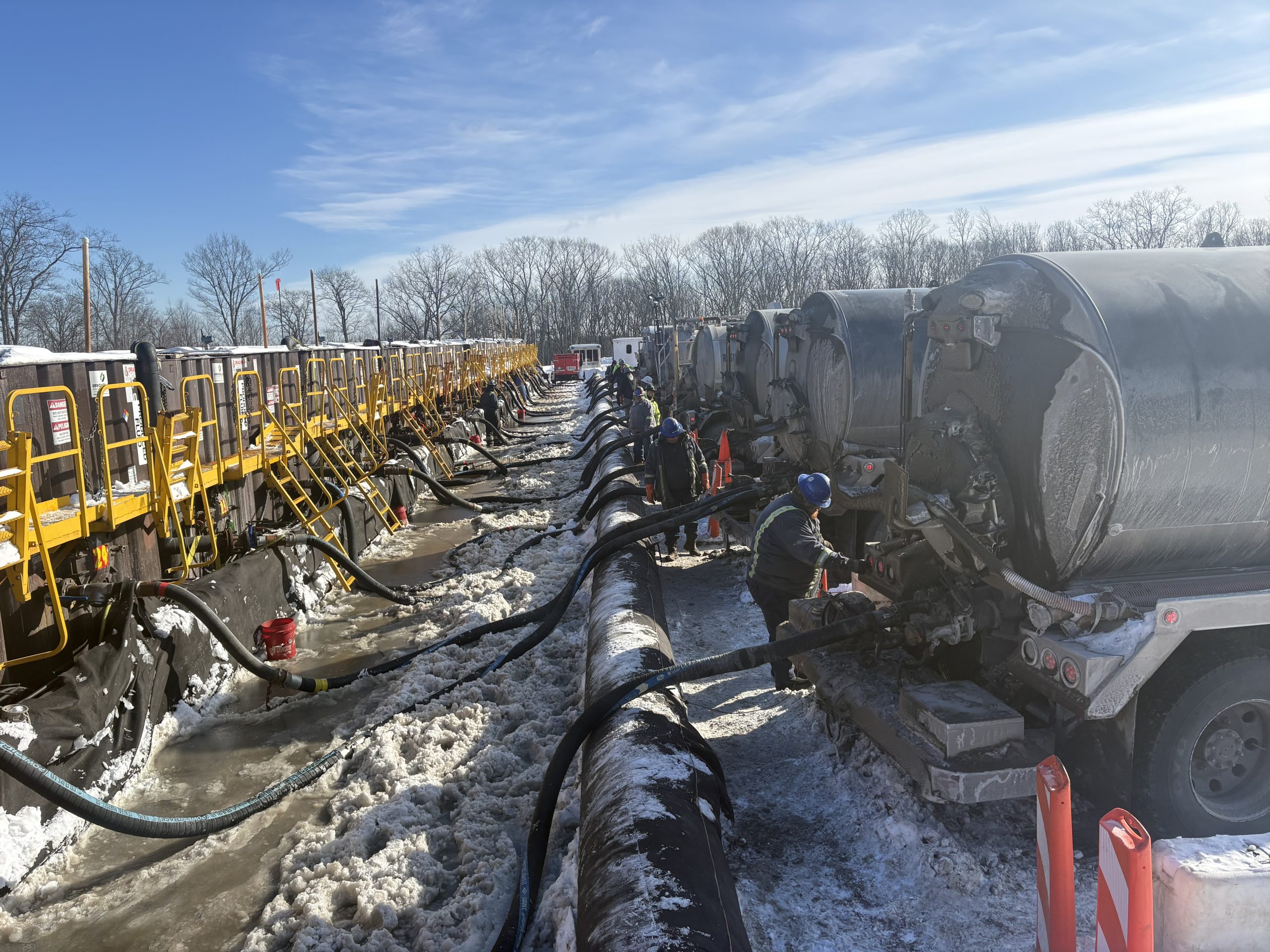
As a new cold front sweeps across the Northeast, Pennsylvanians are once again reminded that our energy advantage lies in abundant, affordable, and dispatchable natural gas. Pair this with existing infrastructure and a skilled workforce, and Pennsylvania has become a national powerhouse in generating electricity. As the nation’s third largest electric generator and top exporter of electricity, Pennsylvania’s might, fueled by homegrown natural gas, was on full display during Winter Storm Fern. Once the bitter cold swept across the U.S. in the early part of 2026, a simple truth emerged: when demand surges and temperatures plunge, reliability depends on resources like natural gas that can perform on demand.
Thanks to the dedicated well tenders, pipeline and power plant operators, and utility providers that braved the cold to ensure Pennsylvania natural gas got where it needed to go, no major operational challenges hindered output or deliveries in the region during Fern, the Pittsburgh Business Times reported.
“Rain, sleet, snow, shine, doesn’t matter. We’re out here making sure this energy moves for America,” EQT CEO Toby Rice said while documenting operations at a Washington County well pad during Fern.
On the front lines with the Qrew, showing you what it takes to keep energy flowing in winter operations. pic.twitter.com/HvcyeTRhn9
— Toby Z. Rice (@Shalennial) January 25, 2026
With natural gas both generating approximately 40% of regional grid operator PJM Interconnection’s electricity and directly fueling more than half of all residential heating needs in the Commonwealth, the resource’s reliability – as well as American energy workers preparedness – is essential.
“It’s days like today, in extreme cold, that remind me why we do this,” Seneca Resources well tender Adam Hart said. “We do it to keep other families safe and warm. It’s tough but rewarding to know I’m making a difference.”
2026 Cold Snaps Show Gas Underpins Grid, Energy Resilience
The natural gas industry strives every year to become more resilient and responsive during weather extremes. Producers and midstream service providers take extra steps to prepare for the harshest conditions. From pipe insulation and heat tracers to deploying ground level heating systems, the industry is prepared to deliver on America’s energy needs.
“We’re proud of Pennsylvania’s talented natural gas workforce who’s working through brutal conditions to keep energy flowing safely.” Marcellus Shale Coalition President Jim Welty told the Business Times.
While Winter Storm Fern stress tested America’s power grid, Pennsylvania’s natural gas played a big role in keeping heat and lights on throughout the northeast United States. As the second largest producer of natural gas in the United States, Pennsylvania’s most abundant resource was on full display during Winter Storm Fern. According to federal data:
- Natural gas generation was up 14% compared to the week prior
- Gas-fired generation increased more than 47% compared to the same week in 2025
- Hydrocarbon fuels supplied 71% of total power across impacted regions
And as Bloomberg columnist Javier Blas pointed out:
A screenshot of the electricity generation mix in some of the US largest grids, early monring of a Sunday during a cold blast (ISO, SPP, PJM and MISO).
— Javier Blas (@JavierBlas) January 25, 2026
By far, natural gas, coal, and oil are the main sources. pic.twitter.com/VWp8oBnrdk
Intermittency Exposed
While natural gas performed in overdrive, Winter Storm Fern’s sustained subfreezing temperatures sidelined weather-dependent, intermittent generation and reinforced why dispatchable natural gas power is critical to overcome renewables’ shortfalls.
As the U.S. DOE reports, during Fern’s peak demand:
- Wind generation declined by 40% during peak demand
- Solar provided 2% of electricity
- Wind provided 8% of electricity
Even in Florida, solar failed to deliver. At peak demands, the Sunshine State generated more electricity from wood and trash than solar. In some of the coldest hours, wind and solar delivered only one-tenth of the power they were expected to provide. Without reliable electricity producers like natural gas, grids across America would have faced blackouts.
The cold snaps also showed how the politicization of natural gas and opposition to pipeline infrastructure hurts American consumers, with New England once again facing extreme reliability pressures during Fern that led to the region importing foreign liquefied natural gas to stabilize the grid. Fuel prices skyrocketed in New England due to these self-inflicted constraints, despite low-cost fuel sitting in abundance a few hundred miles south in Pennsylvania.
“Here we are sitting on one of the largest shale gas reserves in the world, and we can’t supply low-cost clean, fuel to our neighbors in the northeast because of policies designed to cut off the infrastructure,” MSC’s Welty explained on a recent podcast with Forbes contributor David Blackmon.
Winter Storm Fern demonstrated that limiting natural gas infrastructure does not eliminate the need for reliable power. It shifts supply to higher cost alternatives and, in some cases, to foreign fuels.
The Policy Gaps Harrisburg Needs to Acknowledge
Winter Storm Fern exposed a hard truth that energy reliability is tested on the coldest days, under peak demand, and when failure isn’t an option. Yet the lessons from that storm – and others before it – stand in stark contrast to energy proposals put forth by Governor Shapiro and several legislators in the General Assembly.
Natural gas currently provides more than 60% of Pennsylvania’s electricity. It’s the backbone of our grid – affordable, dispatchable, and available when extreme weather hits. The Governor’s Lightning Plan would reduce the dispatchable share utilities would be allowed to provide to just 18%, sidelining the Commonwealth’s most reliable resource while layering on billions of dollars to consumers’ utility bills in new costs.
Pennsylvania consumers are already paying more than $700 million annually for existing renewable energy mandates ($1.4 billion the last two years alone), and new programs would add billions more in costs while doing nothing to enhance electric reliability.
Meanwhile, Pennsylvania families have saved nearly $17 billion over the past two years compared to prices in 2008 before the natural gas boom took hold, all because of now-abundant, affordable natural gas. On top of those consumer savings, the industry also supports nearly 123,000 jobs and generates significant local, state and federal revenue, much of which helps fund local communities, conservation programs, infrastructure, and essential services.
Winter Storm Fern showed that policy debates are not merely academic exercises. They have real world consequences that can mean life and death for our residents.
Pennsylvania is at a crossroads. It either takes advantage of the abundant natural gas resources below our feet to ensure affordable and reliable energy for its citizens – or risks a catastrophe in the future.
Failure cannot be an option.
