



April marks another anniversary of Pennsylvania’s landmark energy law, Act 13 of 2012 – a milestone that underscores how a comprehensive regulatory framework can both guide responsible natural gas development and deliver tangible benefits to communities statewide. Fourteen years since its passage, the law is a case study on how a well-designed policy framework that prioritizes local reinvestment can benefit the community and its citizens.
Balancing Growth and Safety
Act 13 established a statewide structure for unconventional natural gas development, pairing economic development with stringent environmental standards and local revenue sharing.
The law established more than 40 new or enhanced environmental, permitting, and operating standards that, combined with operator-led best practices and technological advancements, created the predictability operators need to invest and the safeguards enabling communities to thrive. That structure has proven durable – leading to unprecedented results from the utilization of that natural gas, as data show emissions declining even as electricity produced by natural gas surged.
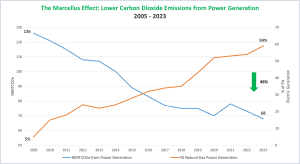
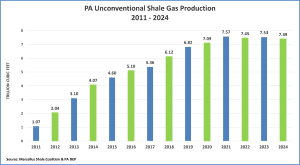
In addition to rapidly moving Pennsylvania into U.S. natural gas powerhouse status, the Commonwealth’s natural gas sector has become a major economic driver for Pennsylvania, supporting jobs and generating billions in economic activity. Because of the framework behind it, that activity also translates into investments people can see and rely on locally.
Turning Production Into Local Investment
Central to Act 13 is the Impact Fee, a unique natural gas production tax designed to ensure communities across the Commonwealth benefit directly from energy development.
Since its inception, the impact fee has generated more than $3 billion statewide and continues to provide hundreds of millions of dollars annually to local governments. Those funds support projects that benefit communities every day, including:
- Property tax reductions
- Road and bridge improvements
- Water and sewer infrastructure upgrades
- Waterway restoration
- Flood mitigation
- Open space conservation
- Playgrounds and community parks
- Emergency services and public safety investments
- Economic development initiatives
For many communities, particularly in rural areas, impact fee funding has become a vital and reliable source of revenue, helping local leaders address infrastructure needs that might otherwise go unmet.
Read more: Governor Shapiro, Lawmakers Tout Benefits of Pennsylvania’s Natural Gas Impact Fee
PIPE Grants Expand Access to Affordable Energy
The Act 13 framework also helped enable programs like the Pipeline Investment Program (PIPE), designed to extend natural gas access to underserved areas. By supporting infrastructure buildout, PIPE grants connect businesses, schools, and communities to reliable, lower-cost and locally-produced energy.
- “Projects supported by PIPE grants serve to connect businesses, industrial sites, municipalities and residents to natural gas to ensure they benefit from having access to Pennsylvania’s abundant, low-cost energy source,” said State Senator Gene Yaw, sponsor of the legislation establishing the Pipeline Investment Program.
- $570,084 was awarded to extend natural gas service to the Rockwood Area School District’s facilities: “This project marks a significant step forward in improving energy efficiency, reducing long-term operational costs, and ensuring reliable service for our schools – allowing us to better focus resources on student learning,” said Mark R. Bower, superintendent of Rockwood Area.
- $877,918 was awarded to Leatherstocking Gas Co. to support a natural gas expansion project: “Leatherstocking is excited and proud to be one of the recipients of a PIPE grant for our upcoming Wyalusing expansion project. This program was essential in helping make this project a reality, and we’re looking forward to delivering on our promise to deliver affordable, American natural gas to local people. Wyalusing is a growing community with a big vision, and we’re thrilled to be a part of it,” said Tony Dorazio, CEO of Leatherstocking Gas Company.
A Model Still Delivering
As April also marks Earth Month, Act 13 stands as a reminder that thoughtful policy can advance both energy development and environmental stewardship – proving to be one of the most consequential steps Pennsylvania has taken to strengthen its energy economy while supporting a more sustainable environmental future. To learn more about the positive benefits of the Impact Fee and how your community can access these funds, click here.
