



While electricity costs are top of mind for Pennsylvania families, a recent Pennsylvania Electricity Update from the Independent Fiscal Office (IFO) misses the mark on actual cost drivers behind power prices.
The facts:
Understanding Your Power Bill: Electricity bills are made up of several distinct components, including generation, transmission, distribution, taxes, fees, and the costs associated with state alternative energy mandates. Understanding what is driving utility costs requires examining each of these components independently. The IFO report fails to do this.
Unfortunately, their analysis erroneously combines both generation and transmission costs together – then suggests natural gas prices are primarily responsible for rising costs despite average natural gas prices being largely unchanged during their study period (2018-2025).
Combining generation and transmission costs creates a misleading picture because fuel prices only directly affect generation, not transmission or distribution costs. Assigning rising transmission expenses to fuel markets misconstrues the source of higher bills – much like blaming the cost of an automobile on the price of gasoline.
In short, the IFO analysis conflates distinctly separate cost factors and fails to examine the rising costs attributable to these other factors, including transmission, distribution, and state alternative energy mandates.
Natural Gas Stabilizes and Reduces Electricity Generation Costs: The IFO suggests that Pennsylvania’s higher electricity prices are largely the result of natural gas prices. Oddly, to justify this conclusion, the IFO only compares natural gas prices from 2020 to 2022. This limited analysis is clearly skewed because of some obvious historical anomalies:
- 2020 natural gas prices were at or near all-time lows driven primarily by the global pandemic.
- 2022 prices spiked as a consequence of Russia’s invasion of Ukraine, which set off a scramble for European countries to secure natural gas supplies and wean their reliance on Russian energy.
These years are outliers for purposes of comparing prices and utilizing them to draw conclusions misrepresents pricing data in their stated study period.
Inexplicably, the IFO ignores historical and more recent natural gas prices. For example, 2024 prices averaged just $1.65 per mcf – one of the lowest average prices in nearly three decades – and 2025 prices averaged just $2.63 per mcf, a mere 16 cents higher than the average price in 2018.
Data from the Pennsylvania Public Utility Commission demonstrates exactly where costs have increased over time:
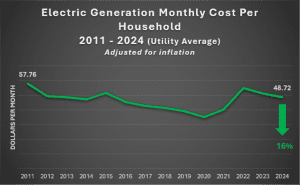
- Electric generation costs in Pennsylvania are down 16% since 2011 after adjusting for inflation. This conclusion is further supported by an analysis undertaken by the Electric Power Supply Association (EPSA) and Energy Tariff Experts.
Source: Pa. PUC
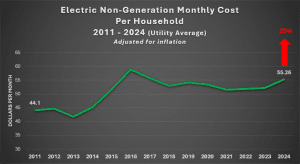
- Non generation costs such as transmission, distribution, taxes, and fees are up 25% over the same period.
Source: Pa. PUC
- State alternative energy mandates have increased costs by more than 600% since 2018, with Pennsylvania consumers paying nearly $3 billion to comply with these mandates, including $1.4 billion over the past two years.
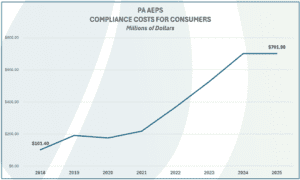
Source: Pa. PUC
Conversely, natural gas has played a stabilizing role in electricity generation costs, helping keep that portion of energy bills relatively flat. In fact, when compared to 2008 wholesale gas prices, over the last two years Pennsylvania natural gas consumers have realized over $18 billion in savings thanks to lower natural gas costs.
The Bottom Line for Pennsylvanians: The IFO’s attempt to simplify a complex issue does a disservice to the facts. Electricity prices are shaped by a mix of market forces and policy decisions. Actual data shows that natural gas has helped stabilize – and in fact decrease – generation costs over time, while non-generation expenses and state mandates continue to drive a growing share of consumer bills.
The fact remains: Pennsylvania-produced natural gas continues to deliver significant economic, environmental and consumer benefits to communities all across the Commonwealth.
