




Any serious conversation about energy affordability must include unlocking Pennsylvania’s natural gas resources. With demand for electricity growing exponentially and Pennsylvania’s elected officials discussing the future of the grid and related risk, solutions must include natural gas to avoid higher utility bills, ensure reliability, and provide a purely American energy option for consumers.
Throughout the last several months, leaders have gathered from Pittsburgh to Wilkes-Barre asking the same urgent question: how do we keep the lights on without burdening families and businesses with higher prices and threatening reliable access to power?
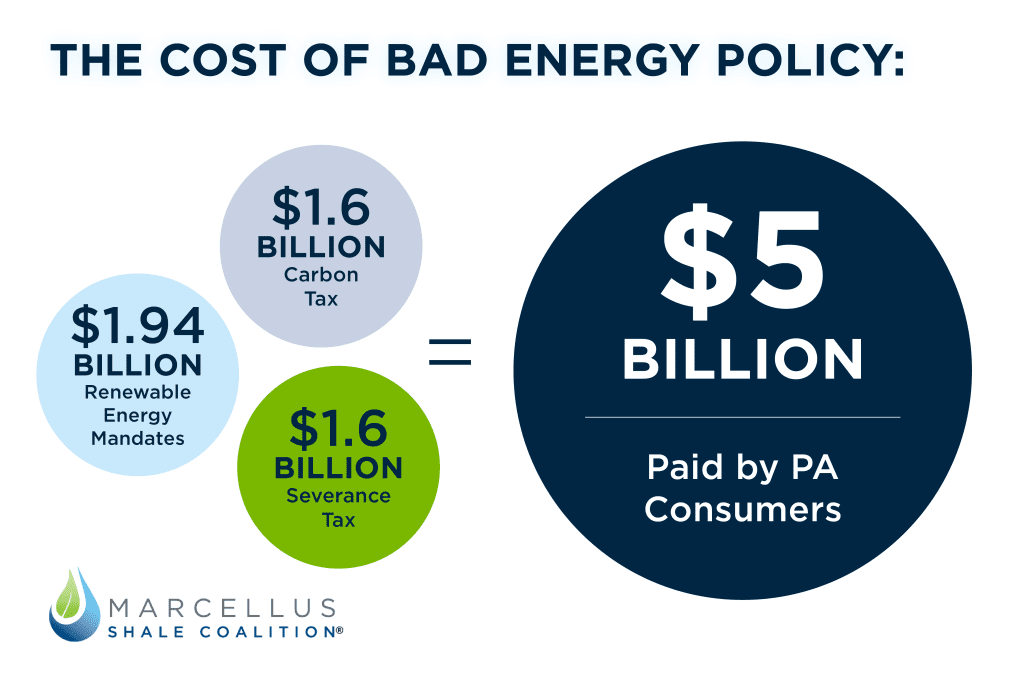
Poor policy choices as proposed by the Shapiro Administration and other short-sighted lawmakers risk adding roughly $5 billion annually to Pennsylvanians’ energy bills. Price impacts would be driven by higher capacity costs, deferring construction of new generation well into the future, expanded alternative energy mandates, and new taxes on electricity generation.
If affordability and reliability are the goal, the path forward isn’t complicated. It starts with recognizing what is already working. And in Pennsylvania, that answer is natural gas.
As regulators and grid operators recently testified during a Pennsylvania state Senate hearing in Pittsburgh, a consistent theme emerged: demand is rising faster than new generation is being added, timelines are compressing, and the electric grid will need significant new generation to keep pace.
“The bottom line is we need more generation. If we want to affect reliability and affordability, we need more generation. We need to prioritize what we can accomplish now,” said Senator Gene Yaw, chair of the Senate Environmental Resources and Energy Committee.
That urgency reflects a broader shift underway. After years of relatively flat demand, PJM is now projecting rapid growth driven by data centers, advanced manufacturing, and electrification. This growing demand requires large volumes of dependable power, and it needs to be delivered without delay.
That same dynamic came up at the Luzerne County Community College roundtable on permitting reform hosted by U.S. Senator Dave McCormick, where participants pointed to the surge in data center and AI infrastructure as a key driver of new electricity demand. Whether Pennsylvania captures that investment will depend in large part on whether it can deliver energy reliably and at a competitive cost.
Affordability Starts with Reliability
The Senate hearing made clear that affordability and reliability are inseparable. When supply can’t keep up with demand, prices rise – especially during peak periods when the system is under the greatest strain.
That dynamic is already familiar in Pennsylvania. During winter demand surges, constrained supply puts upward pressure on prices. The system works best and costs stay lowest when energy is abundant and readily available.
That is exactly what natural gas provides: dispatchable power at scale that stabilizes the grid and helps mitigate price spikes when demand is highest. In a moment defined by speed and scale, that reliability matters now more than ever.
What the Market Is Actually Telling Us
If you want to know what works, follow the investment.
Across the PJM electric grid, developers are prioritizing projects that can be built quickly and perform reliably at scale. In the first cycle of PJM’s reformed interconnection process, 811 new generation projects totaling roughly 220 GW applied to connect to the grid – led by natural gas, with approximately 105.8 GW across 157 projects.
Pennsylvania’s Built-In Advantage
Pennsylvania isn’t starting from scratch. Sitting atop the Marcellus Shale, the Commonwealth is one of the largest natural gas producers in the country, and that has delivered real benefits.
Pennsylvania’s natural gas supply saved consumers nearly $9 billion in 2025 and has helped keep wholesale electricity prices stable over the past decade.
“But the economic potential of this resource can only be realized if government moves at the speed of business,” Marcellus Shale Coalition President Jim Welty said at the roundtable.
As the second-largest natural gas producer in the nation, Pennsylvania has the ability not just to meet its own needs, but to support the broader region with reliable, lower-cost energy. As the largest exporter of electricity in the nation, Pennsylvania is already keeping the lights on in our neighboring states.
But having abundant supply is only part of the equation. Getting that energy where it’s needed is what ultimately determines reliability – and cost.
“We have abundant supply, we just need the ability to get that supply to them, which is pipelines,” said PA Public Utility Commission Chairman DeFrank.
Without adequate pipeline capacity, supply constraints persist, limiting the system’s flexibility and putting upward pressure on prices – particularly during periods of high demand. It also risks pushing new investment to places that can deliver energy more efficiently.
Turning Momentum into Action
Momentum is starting to build at the federal level to address these constraints.
Senator McCormick – who discussed these issues directly at his recent roundtable – has introduced the Unlock American Energy and Jobs Act, which would streamline permitting and establish clearer timelines for critical infrastructure projects.
“The permit reforms put forth by Senator McCormick will provide meaningful changes allowing us to efficiently utilize our vast and reliable energy reserves and help secure our shared goal of energy dominance,” said MSC’s Welty.
Expanding infrastructure remains one of the most direct ways to translate Pennsylvania’s natural resource strength into consistent reliability and long-term affordability.
What Serious Affordability Looks Like
The conversations in the last few weeks have made one thing clear: while there is broad agreement on keeping energy costs low, delivering affordability requires the right action.
That means building reliable generation at scale, expanding the infrastructure needed to move it efficiently, and fully leveraging Pennsylvania’s natural gas advantage on timelines that match rising demand. It also means policymakers foregoing the bad ideas put forth by some that would increase utility bills by billions of dollars.
Pennsylvania already has the resources and the foundation to lead. We can’t afford to get this equation wrong – and neither can consumers.
